延安精神图腾之宝塔山
在黄土高原的褶皱深处,延河水蜿蜒而过,河畔一座八角的古塔凌空矗立。这座始建于唐、重修于明的宝塔山,既是地理坐标,更是精神图腾。它见证过丝路驼铃,更以沉默的姿态目击了中国近代史上最惊心动魄的红色革命。当历史的风云在此交汇,宝塔山早已超越砖石土木的物质形态,成为铭刻民族记忆、承载精神密码的文化符号。
The Baota Pagoda: A Totem of the Yan’an Spirit
Deep within the folds of the Loess Plateau, the Yanhe River meanders by, and on its banks stands an ancient octagonal pagoda. Baota Pagoda, first built during the Tang Dynasty and rebuilt in the Ming Dynasty, is not only a geographical landmark but also a spiritual totem. It has witnessed the camel bells of the Silk Road, and in silence, it observed the most thrilling chapters of China’s modern red revolution. When the winds of history converged here, Baota Pagoda transcended its physical form of brick and wood, becoming a cultural symbol etched with national memory and bearing the code of spiritual heritage.
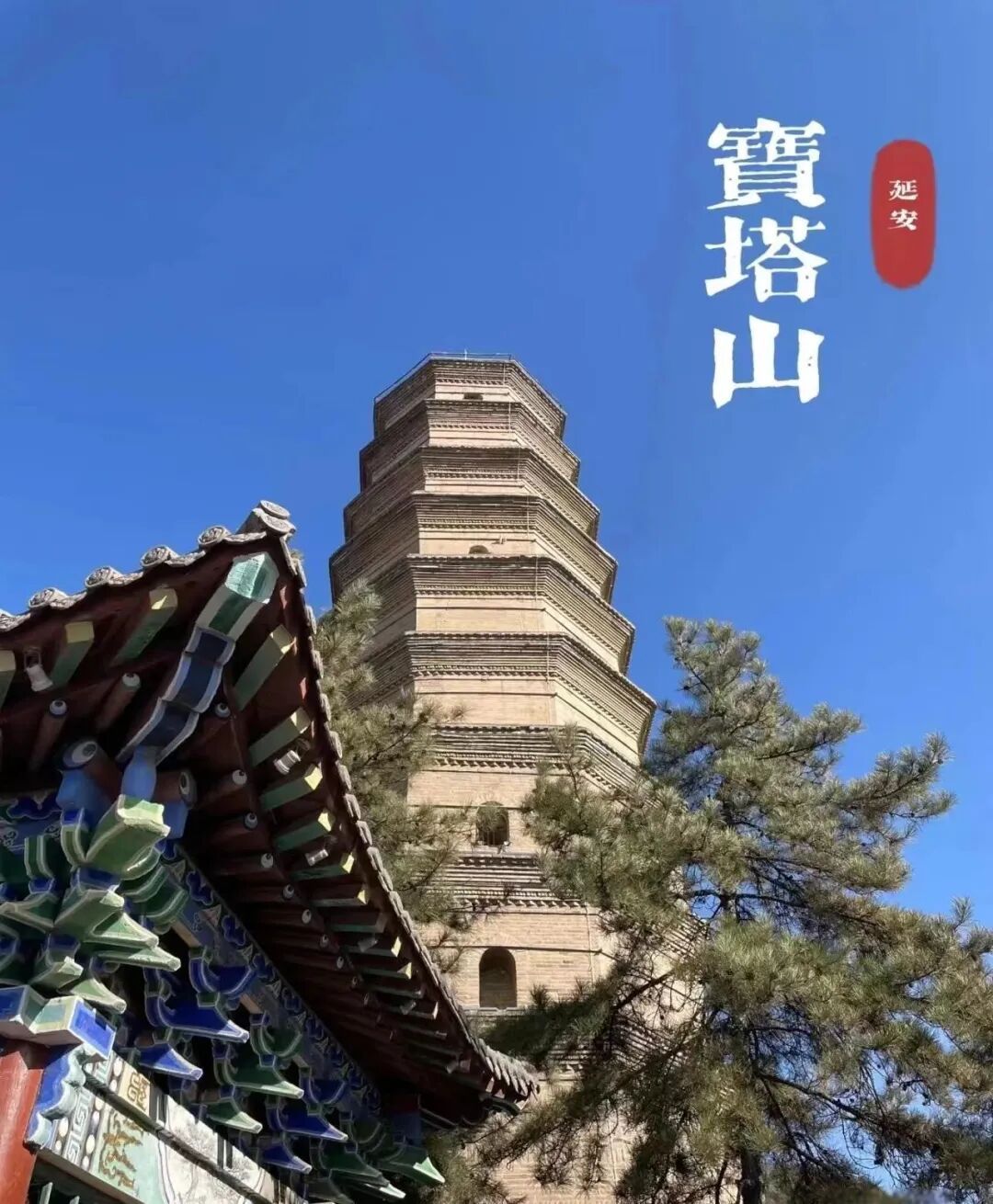
宝塔山,古称丰林山,北宋时改名为“嘉岭山”。传说,在延安城里,曾经有一条修行几千年的黑龙。然而,这条黑龙却走火入魔,闯入了城中,顿时给城中带来了巨大的恐慌和混乱。这一情况惊动了天庭,玉帝不能容忍这样一条黑龙扰乱人间的安宁。于是,玉帝命令天神下凡,他们巧妙地将黑龙诱出,然后用强大的法力将其捆住。为了防止黑龙再次逃脱为祸人间,天神们随后在山上建起了一座九层宝塔。这座宝塔就像一个忠诚的卫士,镇住了恶龙。它高44米,共九层,它巍峨地耸立在山上,仿佛在诉说着那段古老而神秘的过往。这座塔从唐代便存在了,历经岁月的洗礼,见证着无数的变迁
Baota Mountain, anciently known as Fenglin Mountain, was renamed “Jialing Mountain” during the Northern Song Dynasty. Legend says that a black dragon that trained for thousands of years once lived in Yan’an. However, this dragon lost its way and rampaged through the city, causing great panic and chaos. This disturbance reached the heavens, and the Jade Emperor could not tolerate such a disruption. He commanded divine beings to descend to earth. They cleverly lured the dragon out and bound it with powerful magic. To prevent the dragon from escaping and wreaking havoc again, they built a nine-tiered pagoda on the mountain. This pagoda, like a loyal guardian, subdued the evil dragon. It stands 44 meters tall with nine tiers, towering majestically as if narrating its ancient and mysterious past. This pagoda, existing since the Tang Dynasty, has weathered the ages and witnessed countless changes.
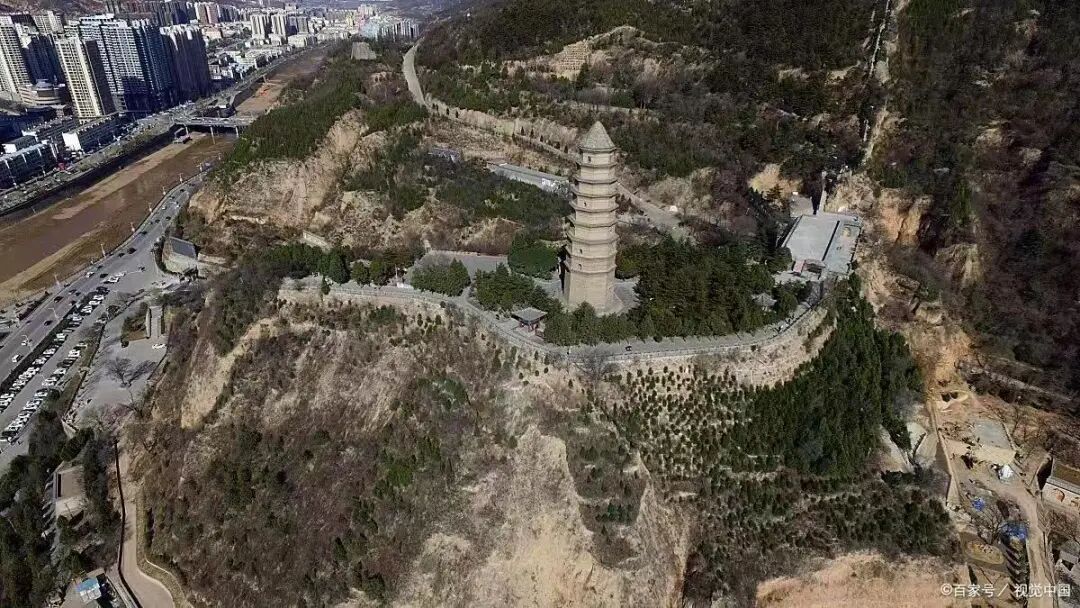
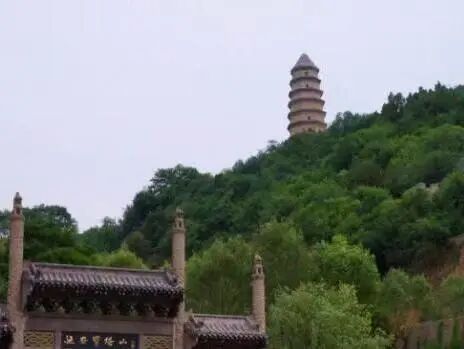
随着时间的推移,宝塔山迎来了新的使命。1937年1月13日,中共中央进驻延安后,延安成为了领导中国革命的大本营和总后方。这座古老的古塔,又被赋予了新的意义,它成为了革命圣地的标志和象征。无数的革命志士奔赴延安,他们仰望宝塔山,心中充满了希望和力量。宝塔山见证了他们的奋斗、牺牲与奉献。
As time passed, Baota Pagoda embraced a new mission. On January 13, 1937, after the Central Committee of the Communist Party of China settled in Yan’an, the city became the headquarters and rear base of the Chinese revolution. This ancient pagoda was imbued with new significance, becoming a symbol of the revolutionary holy land. Countless revolutionaries flocked to Yan’an, gazing up at Baota Pagoda, their hearts filled with hope and strength. Baota Pagoda witnessed their struggles, sacrifices, and contributions.
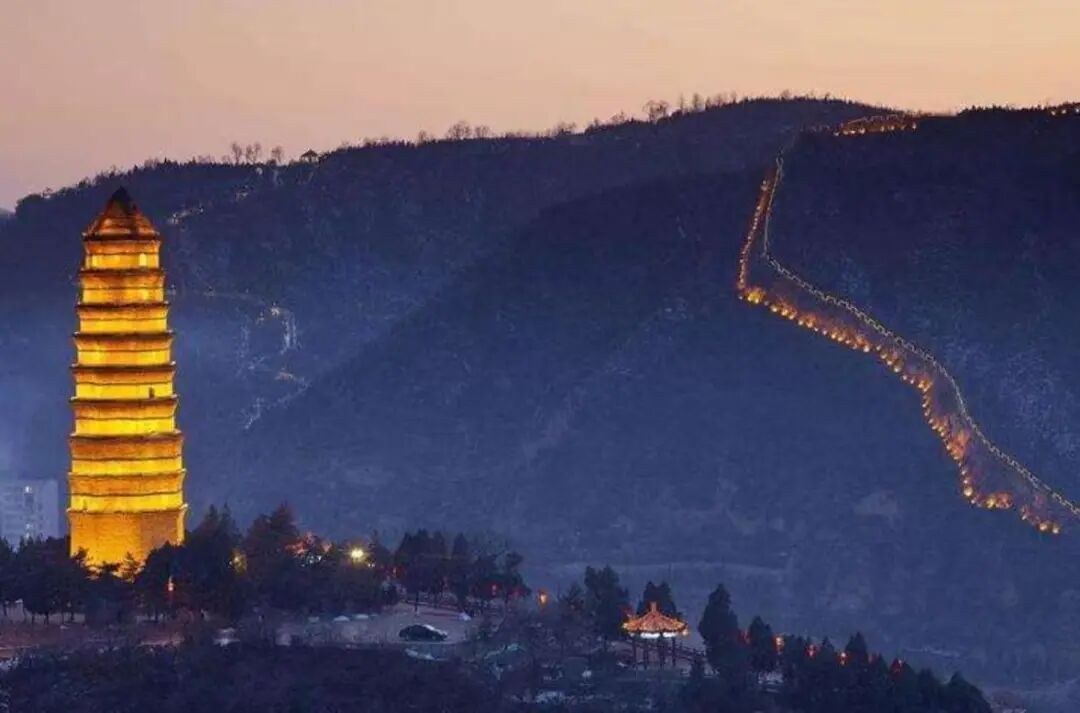
在战争年代,宝塔山就像一座灯塔,照亮着人们前行的道路。战士们在它的注视下训练、战斗,百姓们在它的庇佑下坚守、抗争。它的存在,给予了人们精神上的慰藉和鼓舞。山上的摘星楼、烽火台等古迹,仿佛也在诉说着那段烽火连天的岁月。
而如今,宝塔山依然屹立在那里。它是延安市的标志性建筑。它迎来了来自五湖四海的游客,他们怀着崇敬之心,登上宝塔山。当他们站在塔顶,全城的风貌尽收眼底。他们看到的不仅是延安城的现代繁华,更是那段波澜壮阔的历史画卷。
During the war years, Baota Pagoda stood like a lighthouse, illuminating the path forward. Soldiers trained and fought under its gaze, and the people held firm and resisted under its protection. Its presence provided spiritual solace and inspiration. The ancient relics on the mountain, such as the Star-Gazing Tower and the Beacon Tower, seem to recount the fiery years of war.
Today, Baota Pagoda still stands tall. It is a landmark of Yan’an City. It welcomes visitors from all over the world, who climb the mountain with reverence. From the top of the pagoda, the entire cityscape unfolds before their eyes. They can see not only the modern prosperity of Yan’an but also the grand historical panorama.
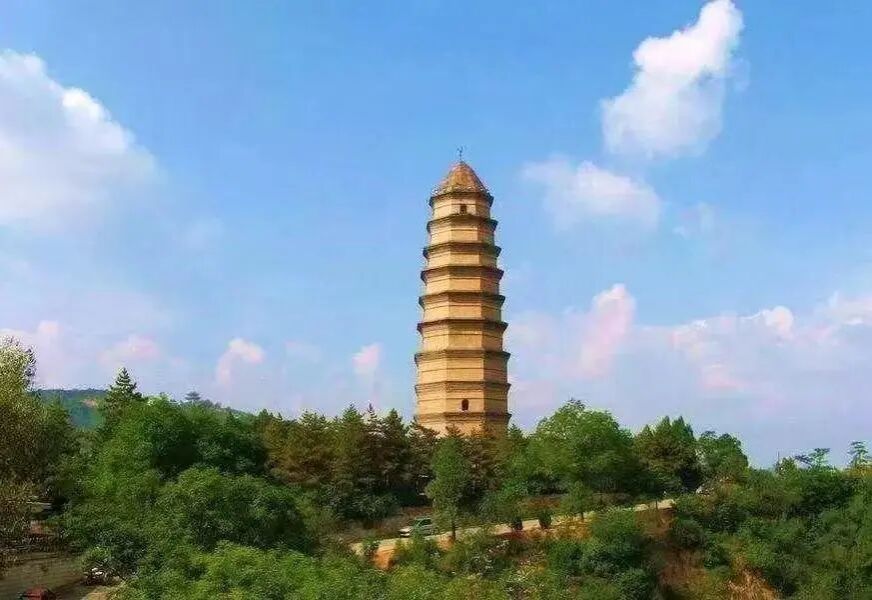
宝塔山,它是自然景观的瑰宝,更是历史与文化的伟大载体。它见证了延安从古代到现代的发展历程,从神秘的传说到革命的烽火,再到如今的繁荣昌盛。它就像一位慈祥的老者,静静地诉说着过去的故事,又像一座不朽的丰碑,永远铭刻在人们的心中。
Baota Pagoda is a gem of natural scenery and a great vessel of history and culture. It has witnessed Yan’an’s development from ancient times to the modern era, from mysterious legends to revolutionary fires, and now to prosperity and flourishing. It is like a benevolent elder, quietly recounting past tales, and an immortal monument, forever etched in people’s hearts.

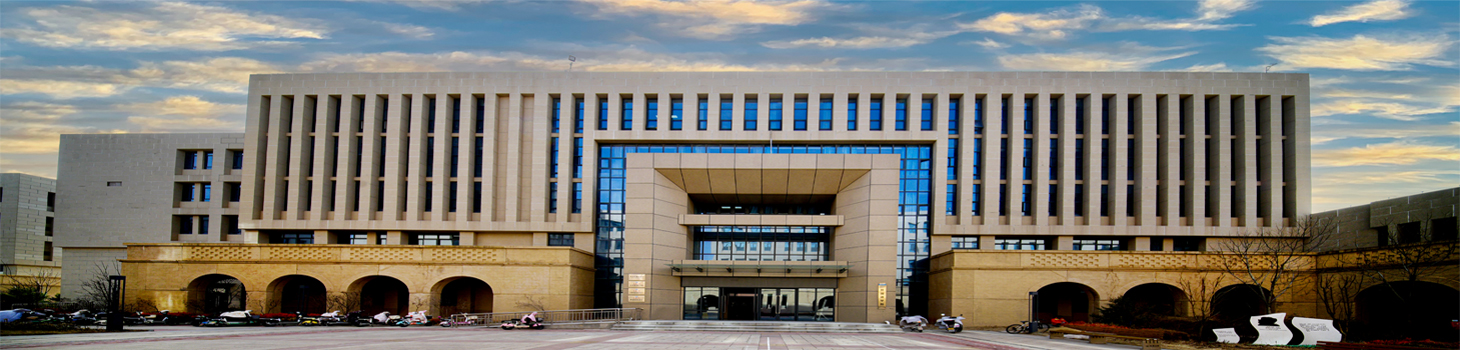
 地 址:中国 陕西 延安市延安大学
 邮 编:716000
 电话:0911-2650707