亲爱的朋友:
欢迎走进“红帆远航”特别节目。
“红帆远航”是延安大学外国语学院特色党建项目的视频再现。现在,您收看到的是纪念中国工农红军长征胜利90周年专题板块。
延安大学是由毛泽东同志亲自命名、中国共产党创办的第一所综合性大学。其历史可以追溯到1937年成立的陕北公学。建校80多年来,学校秉承立身为公、学以致用的育人理念,培养了一批批优秀人才,为民族解放,革命胜利和老区建设作出了重要贡献。
The Long March Spirit: A Young Medic's Story and Its Universal Appeal
长征精神:一位年轻医务工作者的故事及其普世感召力
Hello everyone! I am Wang Zihao. This year marks the 90th anniversary of the victory of the Long March. The Long March is one of the greatest miracles in Chinese revolutionary history. In order to carry forward the noble Long March spirit and let more young people know about those unforgettable red stories, today I would like to share the story of Kong Xia with all of you.
大家好!我是王子豪。今年是长征胜利90周年。长征是中国革命史上最伟大的奇迹之一。为弘扬崇高的长征精神,让更多青年人了解那些难忘的红色故事,今天我将为大家讲述孔霞的故事。
Standing before a grave marked "Red Army Tomb" in Zunyi, a city in southwest China's Guizhou Province, Kong Xia tells visitors about the young medic buried beneath it. The medic was only 18 years old in January 1935, when the Red Army reached Zunyi during the Long March. Staying behind to treat sick villagers, he lost contact with his unit and was killed by enemy forces. Local people, risking their own lives, secretly buried the body.
在位于中国西南部贵州省的遵义,孔霞站在一座标着 “红军墓” 的坟墓前,向参观者讲述埋在这座墓下年轻医务工作者的故事。1935年1月红军长征途经遵义时,这位医务工作者年仅18岁。他留下来为患病的村民治病,与部队失去了联系,最终惨遭敌人杀害。当地民众冒着生命危险,悄悄将他安葬。
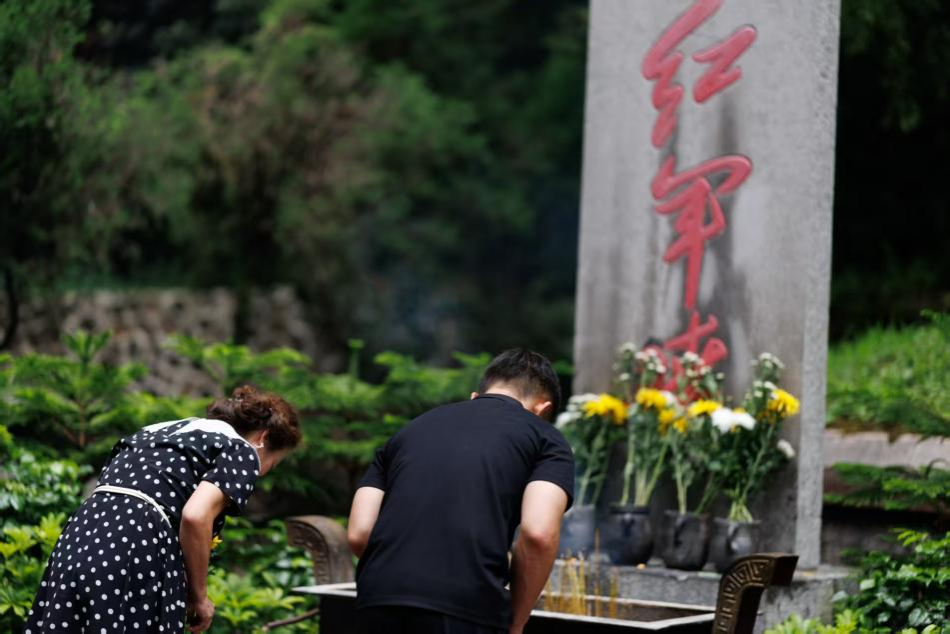
For Kong Xia, a 56‑year‑old volunteer who has told Long March stories for more than three decades, these stories capture something universal. The feelings the Long March evokes — kindness, perseverance, the longing for a good life — belong to no single language or nation. Ninety years after the epic journey, the stories are finding new listeners and inspiring people in their everyday lives.
孔霞今年56岁,作为一名志愿者,她宣讲长征故事已有三十余年。在她看来,长征所传递的内核拥有普世价值。长征所唤起的美好品质 —— 善良、坚毅、对美好生活的向往,不受语言与国界的限制。这场史诗般的征程过去九十年,长征故事依旧不断收获新的听众,在日常生活中激励着一代又一代人。

It was no easy journey. The army went through more than 600 battles while braving raging rivers, snow‑covered mountains, and treacherous grasslands, with many dying on the way. By December 1934, less than two months into the march, the Central Red Army had lost more than half its strength, shrinking from over 86,000 to just over 30,000.
长征之路绝非坦途。红军经历了六百多次战斗,勇渡激流、翻越雪山、跋涉凶险的草地,许多战士永远留在了路上。到1934年12月,长征出发还不到两个月,中央红军兵力就折损过半,从八万六千多人锐减至三万余人。
Even facing heavy losses and continuous dangers, the Red Army soldiers never abandoned their faith. They adjusted plans according to real situations, supported each other through hunger and cold, and kept moving forward toward their goal. Their stories capture the resilience that defined Red Army soldiers: a refusal to let hardship stand in the way of the cause they believed in.
即便伤亡惨重、危机四伏,红军战士从未动摇信念。他们根据实际情况调整作战计划,在饥寒交迫中彼此扶持,向着目标不断前行。他们的故事彰显着红军顽强不屈的品格:绝不允许艰难险阻阻挡自己所坚守的事业。
Kong Xia believes the Long March spirit, which comes down to keeping the faith, braving setback after setback, and putting the people first, is important to achieving the Chinese dream. "When people tell the Long March stories today, they do not tell them to dwell on misery, but to light the way forward," she said.
孔霞认为,长征精神的核心就是坚守信念、直面一次次挫折、将人民放在首位,这种精神对于实现中国梦至关重要。她说:“如今人们讲述长征故事,不是沉溺于过往的苦难,而是为了照亮前行的道路。”
The Long March is never a story told merely within China. First published in Britain in 1937, American journalist Edgar Snow's Red Star Over China introduced the Chinese revolution to international readers. Decades later, Pulitzer Prize‑winning journalist Harrison Salisbury retraced the route and described the Long March as "a great human epic."
长征的故事早已走出中国国门。美国记者埃德加・斯诺所著的《红星照耀中国》于1937年率先在英国出版,向全世界读者介绍了中国革命。数十年后,普利策奖得主记者哈里森・索尔兹伯里重走长征路,将长征称为 “一部伟大的人类史诗”。
This year, Kong Xia has seen a growing number of foreign visitors at the memorial hall and other historical sites in Zunyi. She attributes the rise to China's prosperity and stability. "They come with questions: Why did China succeed in the past? Will it continue to succeed? I believe there will be even more foreign visitors in the future. Because as other countries develop, China's experience may serve as a reference," she added.
今年,孔霞在纪念馆以及遵义其他红色历史遗址见到了越来越多外国参观者。她认为这一现象得益于中国的繁荣与稳定。“他们带着疑问而来:过去中国为什么能够取得成功?未来还能继续成功吗?我相信未来会有更多外国游客来到这里。随着其他国家不断发展,中国的发展经验可以作为一种参考。” 她补充道。

 地 址:中国 陕西 延安市延安大学
 邮 编:716000
 电话:0911-2650707